
 中文
中文
Rock Drill Bit
A rock drill bit is a specialized cutting tool designed to penetrate hard materials such as granite, basalt, limestone, concrete, and other abrasive formations. It is widely used in mining, quarrying, construction, tunneling, and geological exploration. Its main function is to transfer impact energy, rotational force, and flushing pressure from the drilling equipment to the rock surface, allowing efficient penetration with minimal wear.Rock drill bits are manufactured in a variety of shapes and sizes to suit different drilling conditions. Common designs include button bits, chisel bits, cross bits, and insert bits. Among these, button bits are especially popular because their tungsten carbide buttons provide excellent hardness, wear resistance, and impact strength. The arrangement and number of buttons are carefully engineered to optimize rock breaking performance, drilling speed, and bit life. Some bits are designed for soft to medium-hard formations, while others are built for extremely hard and fractured rock.The body of a rock drill bit is typically made from high-strength alloy steel or other heat-treated materials to ensure durability under severe working conditions. The cutting elements, often made from tungsten carbide, are embedded into the bit body to resist wear and maintain sharpness during long periods of operation. Heat treatment and precision manufacturing are essential to ensure the bit can withstand high impact loads, repetitive stress, and abrasive environments.A rock drill bit works by combining percussion and rotation. The drilling machine repeatedly strikes the bit while the bit rotates, causing the cutting elements to fracture and chip away the rock. At the same time, compressed air or water is used to remove cuttings from the hole and cool the bit. This flushing process helps prevent overheating, reduces clogging, and improves drilling efficiency. In modern applications, the design of the flushing holes is also important, as it influences debris removal and overall performance.Different rock conditions require different bit geometries. For example, bits used in soft rock often have fewer and more aggressive cutting points, while bits for hard rock use a stronger structure and more wear-resistant inserts. Factors such as hole diameter, drilling depth, rock hardness, and equipment type all affect the selection of the appropriate bit. Choosing the right bit can significantly reduce drilling costs, improve productivity, and extend service life.Maintenance and proper operation also play an important role in performance. A rock drill bit should be inspected regularly for wear, cracking, or deformation. Using the correct rotational speed, feed pressure, and flushing medium helps prevent premature damage. When used correctly, a high-quality rock drill bit offers reliable performance, stable penetration rate, and long service life in demanding drilling environments.In summary, a rock drill bit is an essential component in hard-rock drilling systems. Its advanced materials, carefully designed structure, and ability to perform under extreme conditions make it a critical tool for efficient and accurate rock excavation.
Products
Category:
-
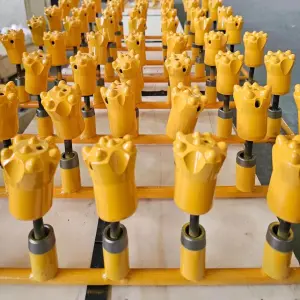
Blast Hole Drill Bit
Category: Mining SuppliesBrowse number: 105Number:Release time: 2026-07-25 17:36:01
News
Category:
-
[industry news]Small Diameter Spacer for 70mm Underground Development Holes
2026-08-18 03:27:39 -
[industry news]Water Gel Emulsion Spacer for Wet Hole Blasting
2026-09-24 03:15:09
Case
Category:
No search results found!
Video
Category:
No search results found!
Download
Category:
No search results found!
Job
Category:
No search results found!
Featured Products
No search results found!



 WhatsApp
 Phone
Phone